Showing posts with label history. Show all posts

Tuesday, May 8, 2012

Montenegro, and the back of the Walloon bus

The Bay of Kotor
We were up nice 'n' early for our tour; it was neat to walk against the stream of commuters to Dubrovnik's Old Town at that hour. There was a bit of a mix-up with the tour, such that we ended up on a bus with thirty or so French-speaking Belgians. Luckily there were two guides, so the half dozen English speakers were segregated to the back of the bus for translations in the silences. As both Tea and I understand French reasonably well -- particularly the guide's perfectly enunciated Montenegrin-school French -- we got the best of both worlds, with quick questions to our guide where we faltered. (Incidentally, we both agreed that what I'm assuming was Walloon French is very difficult to understand. Before I discovered they were Belgians, I seriously suspected that their native language wasn't French, and that they'd simply booked said tour for its accessibility, etc.)

The Cathedral of Saint Tryphon, in Kotor
Let there be no doubt: the Belgians know how to vacation. After clearing the two border crossings -- Croatia's and Montenegro's -- the agenda called for a quick stop at a petrol station to pick up our local guide; 15 minutes for the toilet, a stretch, etc. I blink, and the station patio bar is full of Belgian couples raising glasses of the local Nik Gold. (Obligatory review: I tried Nikšićko pivo in Budva later that day; unpleasantly metallic at the outset, with no finish -- the latter being a selling point, according to the warped reality of beer advertisers.) And this continued at each of the stops! Živjeli!

Montenegro is, simply, beautiful. Driving around the Bay of Kotor was incredible. Cypress trees darken the awesome Dinarides -- hence the country's name, "black mountains" -- leading down to the mirror-like, deep blue bay; it actually resembles a fjord, blocking all wind from the Adriatic. With towns and villages at the water's edge -- the best defence against the main threat of the time: invading Ottomans from the mountains -- it really reminded me of a lush Lake Como; indeed, the Dinarides (is it just me, or does that word conjure up this epic mix of Easy Rider and dinosaurs?) are properly called the Dinaric Alps.

You can just make out the city wall above
The city of Kotor was our first significant stop. Words fail me. That wall 'round the old port, rising up the mountains in the most imposing fashion, was the highlight of the tour. Unfortunately, given the lushness of the terrain, I feel my pictures too have failed to capture it. (This will probably sound simple and odd, but, staring up at that wall, I felt like the greatest of cities from the Romance of the Three Kingdoms video game were alive before me; ah, a childhood bowed before Nintendo.)

This trip has really illuminated how paths diverged following the dissolution of the Socialist Federal Republic of Yugoslavia, and on a spectrum of Croatia to Bosnia, a good example of mixed blessings is Montenegro generally, and the route to our other stop, Budva, specifically.

Relaxing in Budva
The division of the South Slavic language known as Serbo-Croatian was largely a political construct, and while Montenegrins understand Croatian, officially they use a Cyrillic alphabet, whereas the latter use a Latin one. (Incidentally, our guide admitted that she struggles with official, largely government-related, correspondence, as the reality of Montenegro's reliance on tourism means that a Latin alphabet carries the day.) I raise this because our guide pointed out that, on said road to Budva, and throughout the town itself, it's the Russian alphabet, not the Serbian one, on the road signs and shop fronts. This, the large mansions (outside UNESCO protected areas, at least), and (abandoned, in many cases) factories blighting the greenery, reflect Russian exploitation of a newly-independent (since 2006), but poor, country. (For example, unable to afford a currency of their own, Montenegro requested, and received, permission to use the euro, even though they aren't part of the Union.)


I've always had difficulty putting news from this region (e.g., Kosovo's declaration of years past) in context, so it was particularly fascinating and rewarding for me to learn about its history in such beautiful surroundings. Tour guides are no different from any of us, of course, burdened with a set of biases; still, for me, it's tough to beat a few hours with a good storyteller.

The small islet and hotel resort of Sveti Stefan (Saint Stephen)

Check out our album for more pictures from the tour.

Sunday, February 19, 2012

Wales in black: of mountains and the night sky

Our lovely cabin at Pen-y-Dre, the next morning
[We start with a bit I wrote mid week's end.]

February 18, 2012

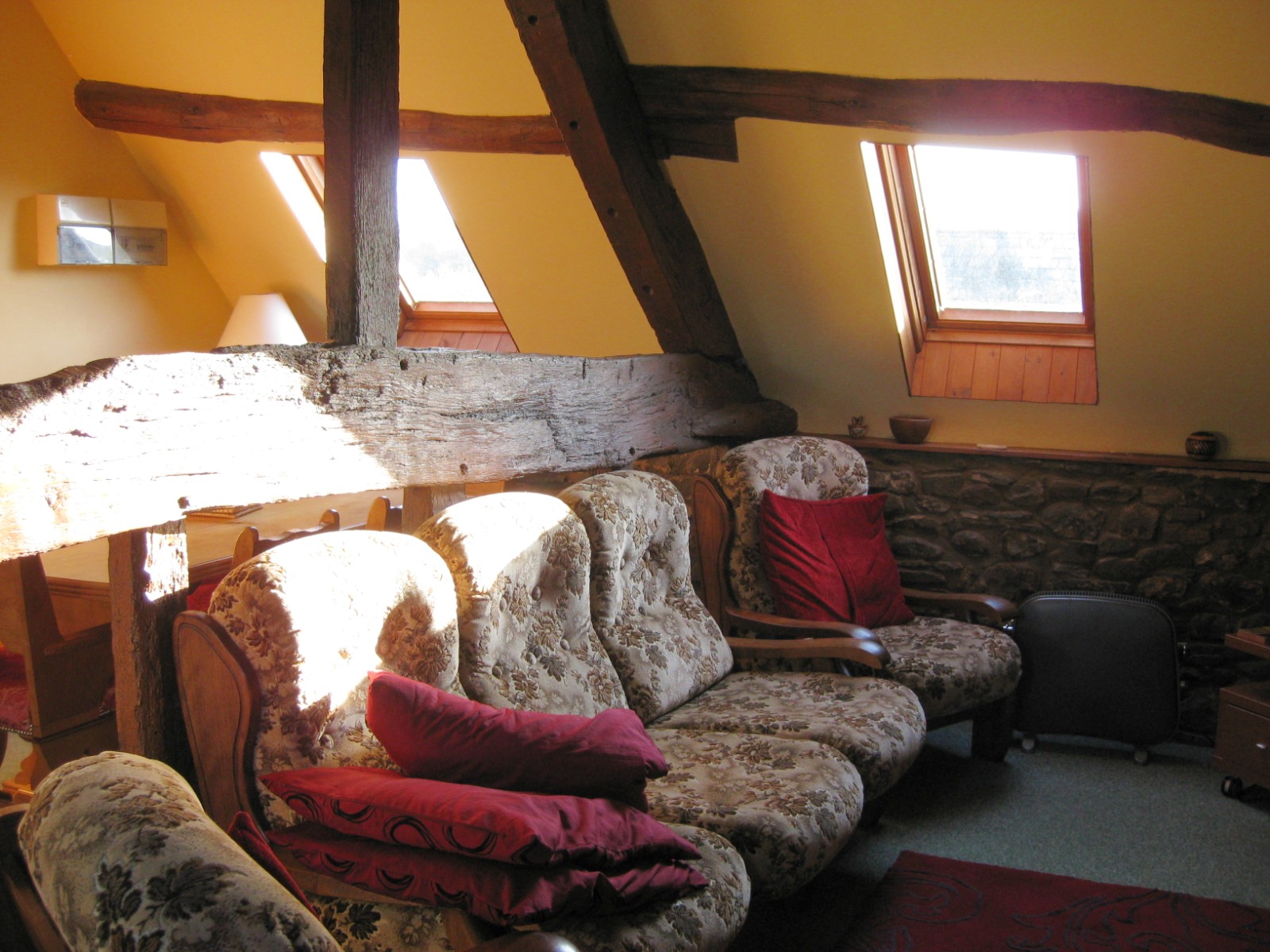
I'm writing from that pleasant valley, on the cusp of a second wind. The endorphins from our hike up Sugar Loaf this afternoon have faded to satisfied sleepiness, slowly perking up now as I drain my cup of joe. I sit at the kitchen table in one of the Pen-y-Dre Farm's cottages in Llanvihangel Crucorney ("Sacred Enclosure of Michael at the Corner of the Rock"); the beams surrounding me are like none I've seen -- almost ostentatious in their rusticity.

We stopped at Raglan Castle the day before
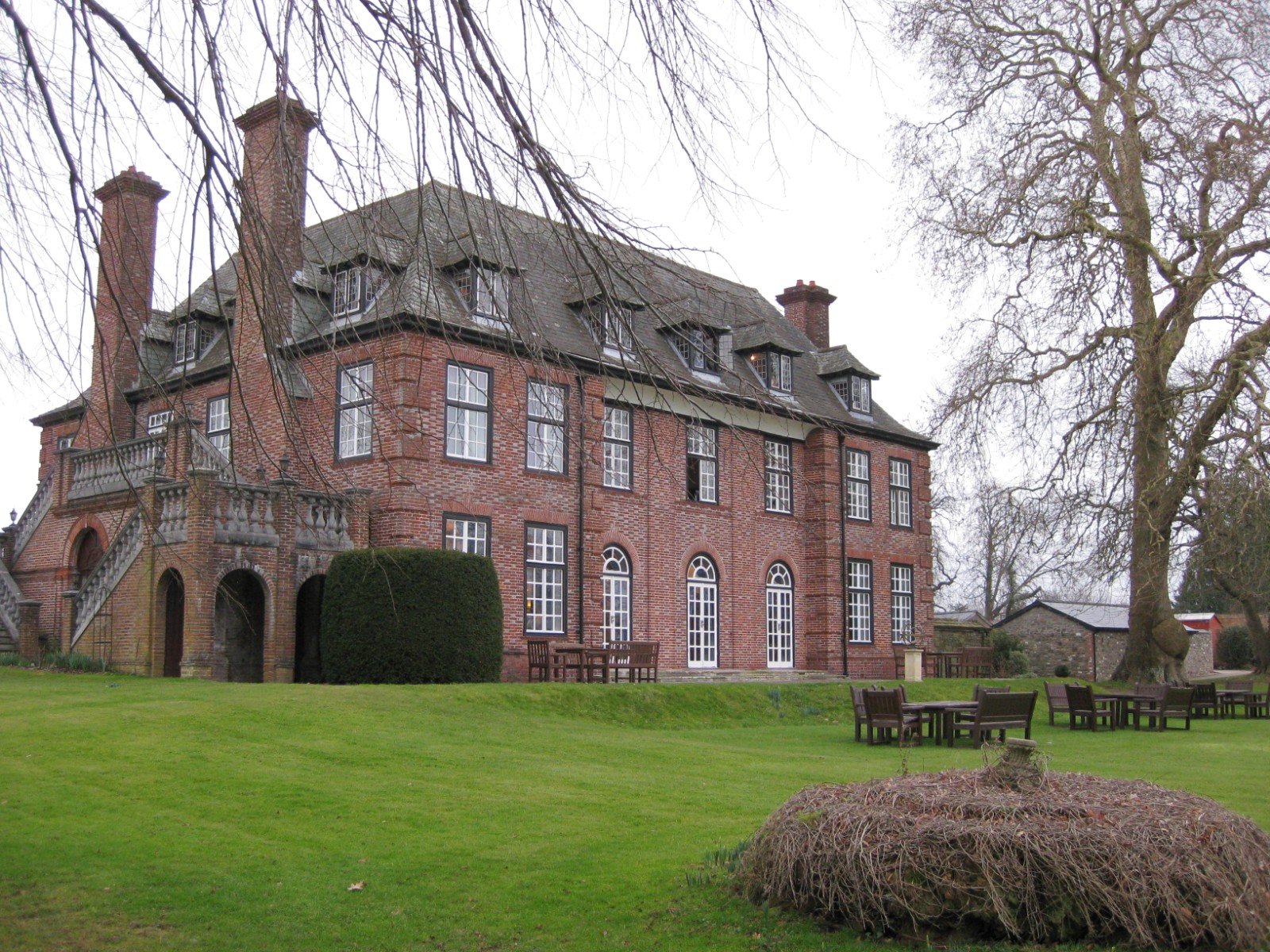
Neither one of us can believe how well this day has come together. We spent last night at the manor house Llansantffraed Court -- more on that in a moment -- and contemplated the grim forecast over their fantastic full Welsh breakfast this morning. As we left for the market hall in Abergavenny, it seemed that heavy rain would indeed dominate the day. Thankfully, Tea was absolutely determined to hike, and so, after a pick-me-up, post-browsing cuppa, we made our way to the tourist information centre for advice on accommodation and hiking in the vicinity.

Llansantffraed Court -- great spot!
It wasn't until we left, with the aforementioned B & B and hill hike recommendations, that we realised the centre had closed minutes after our arrival -- our first bit of luck. And while initially it seemed that Pen-y-Dre Farms was booked up, as Tea chatted with the manager about alternatives he might suggest, his wife piped up to say that they just might have a room, if we could give them a few hours -- Bit of Luck #2. Add that we finished the 5 km hike without so much as a drop of rain, only to have the sky open up as we settled in our cottage -- to say nothing of the beautiful cottage itself, and tea and cake (man-sized wedges at that) that awaited us -- and you're looking at more luck than I can count on a hand. Awww yeah!

My mood of the morning's been turned on its head!

On the way to Sugar Loaf
The summit!

The highlight of the day was probably sitting on a windswept rock two-thirds of the way up Sugar Loaf, feet dangling like I'm a kid in dad's chair, passing a tasty pasty from the market hall back 'n' forth with Tea, watching the shadows of the clouds march across this wide open space like herds of buffalo.

* * *

The Gavenny Valley -- Sunday's hike
Llansantffraed Court was darn near perfect. We'd learned of it through Groupon, and following on from Buttonberg's rave reviews of it last weekend, had us a humdinger of a time. (Until this moment, we've basically retraced Buttonberg's steps, come to think of it, from Raglan Castle -- surely one of the most visually titilating I've seen -- to the manor, to Sugar Loaf.) Llansantffraed Court customised their fixed menu for my lactose intolerance, were consummate hosts through the six courses -- including cured salmon and caviar, confit duck, and loin and pressed shoulder of pork, to name a few -- and stoked an eyebrow-searing fire for us well into the whiskey-filled night.

Oh, and I can't forget the wine pairing: from the riesling (an Australian, from the Pewsey Vale, and Tea's favourite) to the bordeaux on down, each worked beautifully. My favourite was a local red, from the nearby Ancre Hill vineyard: so earthy and yeasty, beetroot in the nose; unlike any wine I've ever tasted. Buttonberg said they never like the same wine and both loved this one. I completely understand; it breaks the mold, and clearly meets in the middle of their tastes.

The end of that story embodies Wales: upon learning of the Buttonberg's gushing love for this local beauty the following morning, the manor called ahead to the vineyard, a few miles down the road, who opened their shop especially for them. They ended up with a case of the stuff.

* * *

On Saturday evening we decided to eat at the Skirrit Mountain Inn, just down the road from our cottage. We turned around almost immediately to grab a torch: there wasn't a street light to be seen in Llanvihangel Crucorney. It reminded me of my last trip to Hare Bay, Newfoundland; I was there for my grandfather's (Dadda's) funeral, and had to make my way back to my Aunt Queen's house each evening by the light of the moon. Now, as then, the constellations popped, as if we were in a planetarium; indeed we had a mobile one seconds later, when Tea fired up her app that labelled the stars (and planets) as you swung the phone around the night sky.

The Skirrid Mountain Inn claims to be Wales' oldest pub, having stood for nine centuries. However, Real Heritage Pubs of Wales puts it at "wholly mid- to late-17th century with major alterations in the 19th century." That said, its crackling hearth, tasty grub -- Tea's baby back ribs were a treat! -- and friendly staff were most welcomed, and we got a good dose of authentic history the following evening when we enjoyed a pint at the Llanthony Priory Hotel: "part of a medieval structure making it the oldest building in [the Real Heritage Pubs of Wales guide] that is now a pub."

* * *

February 19, 2012

The Skirrid, with its chasm of legend
After a nice lie-in, we made our way to the main farmhouse for a big fry-up. It was a fantastic start to the day: blue sky, donkeys and roosters putting their stamp on the morn, sunbeam-sleepy cats lounging in a kitchen so full of life lived.

Tea decided on a nearby hike that would take us through the Gavenny Valley and Cwmyoy -- and the famous crooked church of St. Martin's -- up and around the surrounding hills, along part of the Beacons Way, before circling back to the start. The Gavenny Valley stretched on for miles; such a sight in that crisp morning air. Once we were in it, however, looking up at Cwmyoy, the namesake of the previous evening's inn had our undivided attention:
The Skirrid is the most eye-catching mountain in the area. Shooting up from the Gavenny Valley... gentle green fields climb about halfway up its flanks, giving way suddenly to purple scrub and bracken... [It] has long been held to be a holy mountain; the almighty chasm that splits the peak is said to have been caused by the force of God's will on the death of Christ, a theory that drew St. Michael and legions of other pilgrims... Another theory claims that Noah's Ark clipped it as it passed by.

Inside 'crooked' St. Martin's

The toughest part of the day was still ahead of us: each time we crested a rise, expecting to see the Beacons Way that circled the valley, another hill would present itself. Boy, what a view awaited us at the peak, though. When we made it back to the car, well over four hours later, we were ready for a rest; particularly as we were very aware of the previous day's hike as well.

The last stop of the day was Llanthony Priory, and we made it with minutes to spare. We snapped a few shots as a mist began to fall, briefly taking shelter in the aforementioned hotel of the same name, before heading for home, the sun at our backs and setting the world afire. We soon outran the rain. You could see it in the distance, though; great sheets out near the horizon, tapering to funnels as they touched the earth.

Llanthony Priory

Check out our Picasa album for more pictures from the weekend.

Sunday, November 27, 2011

Berlin: "Even monkeys know this!"

Early Tuesday morning we caught the Orlybus, right outside our hotel, to Paris-Orly airport for our Air Berlin flight to Tegel. It couldn't have gone smoother: the bus ride was less than half an hour, our packs fit perfectly in the overhead compartments, and we got these delicious fresh pretzels filled with butter as a snack on the short flight.

The cab ride to our apartment in Prenzlauer Berg, in former East Berlin, was one of the most entertaining of our lives: every taboo associated with the country's history had come up before we were even off the airport property, and it just went from there. A Berliner of Moroccan decent, he was nine when the wall came down. When asked what it was like, he said that the former East Berliners "just went crazy." Suddenly the world was available to them, and they wanted it in a single bite. "Bananas... They went crazy for them. But they didn't know how to open them. We had to teach them! Even monkeys know this!" While he was definitely hamming it up for us, a picture of the time emerged from the hyperbole.

What sticks with me now is how adrift he seemed: unable to fit in in the city of his birth because of the colour of his skin, his hair -- he told stories about a professor who was excited to supervise his work until they met face-to-face, fares now saying how good his German is and asking when he will be going home, the constant searches every time he travels -- and unable to fit in in Morocco (where his parents have now retired) because he doesn't speak Arabic. He repeated many times how he would leave Berlin after university; go anywhere else in Europe.

In some very small way, I could sympathize with his plight: as friendly as the Brits have been to us these last two years, those constant questions about how long we've been here, when we're going home, etc., ensure that this never truly feels like home. I am more thankful than ever that I do have a place to call home; where everyone sounds like me and... Well, I could go on and on about how much I've come to appreciate Canada, but let's get back to Berlin.

The main purpose of this leg of the trip was to see a few of the 50-odd Christmas markets and 80-odd pubs -- with Around Berlin in 80 Beers as our guide -- the city has to offer. I'll highlight a few of each, quickly comment on the others we visited, and then finish with the other sights we took in in between, during our five days in the German capital.

Note: all the places I'll mention were easily reachable from our apartment in Prenzlauer Berg, including what is considered the more remote borough of Spandau; cheaply as well: the passes we used for the whole trip, purchased at a convenience store near our apartment, gave us passage on any train (U- and S-Bahn) or tram, all for little more than €30 each.

Weihnachtsmarkts (Christmas Markets)

Topping our list is the WeihnachtsZauber Gendarmenmarkt, nestling between the French and German Cathedrals. We first happened upon it as the early sunset drew the afternoon fog to evening. It was almost magical, with the festive lights, smells and music, and the bigger city left in the mists. We enjoyed it so much that we stopped by the next day, enjoying delicious fried potato medallions, sausages and mulled wine before making our way to Checkpoint Charlie.

Next up would have to be the market at Charlotteburg Palace. Approaching it at night, walking up Schloss (Palace) Strasse, was a treat; it really was beautifully lit. With a good mix of outdoor stalls and heated indoor shopping, it was easy to spend some time there as well. Some local celebrities seemed to be on hand the night we visited: we turned a corner to find the avenue of stalls lit bright white, cameras following these two wide-smiling folks slowly making their way along, chatting with 'locals' in a clearly staged manner.

Other Christmas markets we visited included:
  • Alexanderplatz: a frequent stop, as it was closest to our apartment. Dominated by an enormous, beautifully-lit replica of a Christmas Pyramid, all in the shadow of Television Tower.
  • Der Grosse Berliner: like a fair or ex, with big rides and shooting galleries amongst the usual stalls and tasty fare.
  • Nostalgischer Weihnachtsmarkt: a nice market in Berlin's historic centre. Chips in a paper cone was a rare (and tasty!) treat there.
  • Potsdamer Platz: surrounded by skyscrapers, including the beautiful Sony Center (more on that later), we learned about the Hungarian origins of trdelnik (a Tea favourite) and bombed down a man-made icy slope in an inner tube!
  • City Weihnachtsmarkt: a bustling market in the shadow of the unique Kaiser Wilhelm Memorial Church.
  • Spandau Weihnachtsmarkt: about twenty minutes west of the famous Friedrichstrasse station by commuter train, this was well worth the trip. It had a small town feel and great community spirit. Plus the stalls serving Baileys in cocoa were a big hit. (And there was a great brewpub out there as well; more on that shortly.)
  • Lucia Weihnachtsmarkt in Kulturbrauerei: the last one we visited, with a medieval feel. There was some sort of reading going on in a nearby warehouse; the place had an awesome vibe. I saw German translations of Craig Thompson and Guy Delisle favourites on sale.

Stephen at Weihnachtsmarkt Alexanderplatz

Pubs and Brewpubs

Tea gave me a copy of Around Berlin in 80 Beers by Peter Sutcliffe a few days before we left, and, for me, it made the trip. There are just so many choices in Berlin -- well, in Germany in general, from what I've seen -- that you need a plan going in. This was reinforced right from the outset, as our first pick, Brauhaus Mitte, was amazing, and my #1 of those we visited. Everything Sutcliffe says is bang-on: you'd never know you're in a mall -- great atmosphere, really -- and while all four of their beers (brewed on-site) in the sampler were tasty, their Hefeweisse Hell was the star. And to top it all off, the meal was excellent as well.

"Tastes like chicken!"
My second choice is a bit tougher. In the end, I'll go with another brewpub, Lindenbrau, for a few reasons: we could see the roof of the beautiful Sony Center from where we were sitting; the one beer they brew, their Hofbrau-Weiße, was excellent; and, most importantly, when Tea asked the waiter to surprise her with a meal, not only did he fail to hesitate, he brought the winning meal in our minds: this beautiful cooked breast of duck. Great spot!

Other pubs we visited included:
  • zum Paddenwirt: a quiet, cosy pub; we'd popped in for a snack, and their soups hit the spot.
  • Mommsen-Eck (Haus der 100 Biere): yeah, that's a hundred beers, all right. Sutcliffe's recommendation was perfect: a rauchbier or smoked lager. The best bit? When I ordered it, the waiter got this big ole smile on his face, "Tastes like chicken!" He wasn't wrong.
  • Berliner Republik: great li'l' irreverent pub. Inspired by Tea's success at Lindenbrau, we all got fowl -- duck, duck, goose as she kept saying all night. Great food, I enjoyed my krug (two?) of Zwick'l, and we stuck around to see the stock ticker of beer prices start up: prices fluctuate based on volumes ordered!
  • Brauhaus in Spandau: as stated earlier, this is a bit out from the centre, but well worth the trip. As Sutcliffe says, their property is almost a neighbourhood, and there's a really warm, welcoming atmosphere. We tried their strong, deceptively smooth Weihnachtsbier (or seasonal specialty) and lighter Havelbrau, as well as enjoying a great supper.
  • Zillemarkt: the 'house beer' Zillebrau (technically, brewed off-site, but specifically for them) was excellent, as were our meals: my cabbage roll was epic! The works of Heinrich Zille are also on display throughout, and well worth a peek.
  • Alois S.: last, but not least, it's more of a restaurant (specializing in tapas, actually) than a pub. Unfortunately, they no longer have the Augustiner Edelstoff on tap, but the brewery's Hell is still very good. We tested it as a late night dessert spot, and, wow, did it blow our socks off. A great end to the trip.
The 'stock ticker' in Berliner Republik

Note: a comment or two about two misses:
  1. Eschenbrau: doesn't open 'til later. I have no excuse, as Sutcliffe lists all the hours for every entry, but as it's a bit out of the way (in Wedding) and I was very disappointed to find it closed, I just thought I'd highlight it.
  2. Willy Bresch: probably because it was so close to our apartment, I took this one for granted. Don't. Set aside a weeknight for it if you can, as it's really small, and, when busy, as it was the Friday we tried to go, incredibly smoky. (And I'm not normally overly bothered by that sort of thing.) A shame, as it's Sutcliffe's favourite pub in Berlin.

Sights

Visiting the Berlin Wall Memorial was a humbling experience. Across the street from the remaining section, the view on high really drives home how much more it was than a wall. Historical accounts, both there and at the Checkpoint Charlie Museum, were so immersive: they even had some of the modes of escape on display in the latter. Finally, the Window of Remembrance (also at the memorial) seemed to dampen all ambient sound: as I stared at the portraits of all those who died trying to escape, it seemed that nature itself mirrored the solemn moment.

The first victim shot trying to escape after the wall went up in '61

The nearby Chapel of Reconciliation provides a segue for the lasting impression the city left on me: that of a creative hub, still working to reinvent itself. The architecture on display -- the chapel, the Sony Center, and the Reichstag Dome all being excellent examples -- really made a big impression on me. It truly is a beautiful city.

Inside the Chapel of Reconciliation

Speaking of the Reichstag, you have to book tours of the Dome in advance. Luckily we found this out early enough in the trip to book a slot in the morning of our last full day in Berlin. What an impressive structure! That, the view, and the excellent audio guide made for an entertaining and educational hour or so -- from detailing the skyline, to discussion of how the cone reflects light down to the parliament floor and reclaims water, to describing the functions of the government itself. Certainly a highlight of the trip!

Although I was a bit too young (and immature) to appreciate the significance of those views of the Brandenburg Gate in 1989, no one can approach it today, particularly at night along Unter den Linden, free from the weight of history. That evening we then cut across the immense Tiergarten parkland to Potsdamer Platz, the leaves crunching underfoot in the near black adding to the solemnity of the occasion.

Finally, we spent a few hours in the Berlin Zoo as well. Highlights included the hippopotamuses -- one of the young ones stole the show -- the condors -- the whoop, whoop of their wings as they flew from perch to perch was truly awesome -- and the lions at feeding time: nearly wet my pants during the latter, if I'm honest; that cage looked like tinfoil by the time they all finally had their huge chunks o' meat.

Up next: the trip movie!

PS: Check out our Picasa album for more pictures from the trip.

Saturday, July 9, 2011

St. Petersburg: Day 2

Outside the Hermitage on our first day in the city
[These last few posts of the cruise were written as we sailed back to Amsterdam. We now continue from our first day in Russia's second-largest city...]

The second day started with a ride on the metro. St. Petersburg's Metro stations fall under three distinct categories: Stalin's "Palaces for the people" of the 50s; the utilitarian ones built after his death, in the 60s; and, finally, a return to finery -- if with less controversial murals (e.g., of Peter the Great's favourite regiment).

The statue of Pushkin in the Pushkinskaya metro station

From there, we made our way out of the city proper, to Catherine's Palace. As we passed more communal housing, Alla explained its origins: before the Bolsheviks, whole floors of these beautiful buildings were rented or owned by nobility and those of means. After the revolution, accommodations were allocated based on family size: these apartments of old could now house dozens of families, all sharing bathroom and kitchen facilities, utility bills, etc.

Alla grew up like that, and attributes her parents' divorce in later years to those difficult conditions; and they only shared with one other family, who weren't alcoholics or loud students -- a rarity, according to her. Fourteen percent of the population still lives this way; ownership was transferred to the residents as part of Perestroika. Alla said that you can always pick out the communal spaces by the old windows in the once-beautiful façades.

Catherine's Palace
The Great Hall

Catherine's Palace -- Catherine I, not Catherine the Great -- was very busy. Still, seeing the Amber Room, fully restored -- at great expense -- was well worth it. Peterhof (Peter's Court) Palace was also busy, but as the tour covered the grounds as well, it was relaxing and enjoyable overall. As many of you will know, the highlight was the astounding fountains:
Fountains were intrinsic to Peter the Great's original plans for Peterhof -- it was the impossibility of engineering sufficiently powerful jets of water that prompted him to move his attentions from the Strelna site to Peterhof -- and subsequent generations competed with their predecessors to add grander, and ever more ingenious, water features [all without pumps!] to the parkland surrounding the Grand Palace.
Peterhof Palace
Us in front of the famous "Samson and the Lion" fountain
Part of the Grand Cascade

Absolutely stunning; and they must've been nothing short of miraculous in the 1700s!

Up next: Tallinn, Estonia

There are more pictures of our time in Russia in our Picasa album.

St. Petersburg: Day 1

[And so, the big day arrives...]

July 8, 2011

It's been a busy few days. We're now sailing back to Amsterdam. Sunday, July 3, marked a historic day in my life: my first steps on Russian soil.
That's Alla on the right
We hired a private tour guide and driver for the two days through DenRus, a course I cannot recommend highly enough. Our guide, Alla, a young woman in her late twenties, was old enough to remember life in the Soviet Union. While we really appreciated her commentary in the Hermitage Museum and the various palaces we visited, she grew up in St. Petersburg, and it was those windows on life -- both as a child there, and then as a young woman travelling for the first time, after Perestroika -- that gave the visit such humbling significance.

Unfortunately, we didn't get to know our driver, Mikhail, as well. Alla said his English wasn't good, but I think it had more to do with his taking a while to warm to us: late in the second day, Nancy was asking about typical working hours -- we questioned Alla constantly on such seemingly mundane subjects throughout the two days, and her patience, and, as I've said, insights on ordinary life there, is something I'll treasure -- when Mikhail suddenly spoke up (pretty much for the first time), "Well, I can tell you that this factory on the left finished work at 3 p.m. sharp, as I used to build tanks there."

As it turned out, he was a military engineer, building tanks under the Soviet regime, and then industrial-grade tractors and earth-movers after its fall. We all lamented that we didn't have more time to tease out his memories of a life lived mostly behind the iron curtain.

From the port, St. Petersburg was daunting. Soviet-era apartment complexes formed a wall on the horizon. As we drove to the UNESCO-protected portion of the city, a sense of oppression descended upon us. It wasn't until later in the day that we realized that it was the unrepresentative lack of locals (even for a Sunday), typical signs, businesses, etc. that was getting us down -- in spite of the beautiful architecture and views on display. By that first afternoon, we were in the heart of local life, aware that St. Petersburg (now) offers a lifestyle closer to home than anywhere else in Europe (e.g., huge supermarkets with ready-to-serve food, their own version of Home Depot: Castorama, etc. -- all on a scale unknown in Spain, France or Italy, for example). [I've since learned that Castorama is a French company, which does hurt my argument a bit; I'll amend it to "anywhere else in Europe that I've visited."]

I even picked up some unpasteurized beer at their supermarket chain, O'KEY; they were bottling it right there in the store, in plastic. It was an excellent ale, in the English style, so I guess you could argue that they live better than I did in Ottawa. [Again, since then I've had excellent ales in Ottawa -- cask-conditioned in one case, and IPAs that'd knock your socks off (e.g., Flying Monkeys' Smash Bomb Atomic IPA and Muskoka's Mad Tom IPA) -- so I'm looking forward to living very well when I return, thank you very much.]

Our first major stop of the day was St. Isaac's Cathedral, one of the biggest domed churches in the world. Alla explained that under the Communists, all religions were banned, and so began an inventory of all places of worship. Any that were not deemed to be of architectural value were slated for demolition. Those that passed muster, such as St. Isaac's, were converted to new purposes; the Museum of Anti-religion in its case, or warehouses, etc. Alla remembered skating in another church as a young child.

Our next stop, the Cathedral on Spilled Blood, faced worse than that ignominy: despite being just about the best surviving example of the fantastically colourful Russian medieval architectural style, the Communists wanted it destroyed. Luckily, however, it was surrounded by so many sites to be preserved, and with demolition techniques so imprecise at the time, it was converted to a warehouse instead; before long, locals began calling it the Cathedral of Potatoes, according to Alla.

All the mosaics inside have now been beautifully restored, and a museum in one corner gives you an idea of the extensive work that was required. It also gave Alla an opportunity to point out that while city life under the Soviets was very secular, both her grannies, out in villages like those depicts in the museum, never stopped attending mass, even as they were excited by the possibilities under the new regime; such dichotomies rested easily on their shoulders, she said. (Similarly, the irony of Lenin's legacy, according to her, is that his body -- on display, and looking three days dead at most -- is worshipped, like some patron saint of anti-religion; a state of affairs Alla claimed most of her generation deem ridiculous.)

Inside the Cathedral on Spilled Blood
You really got a sense of a place in flux. Alla said even up until 2000, the old style of shops selling two types of overcoats, two types of shoes -- and the rush to grab new stock as it arrived, even if it didn't fit, so you could barter for something more suitable with your neighbours -- was still prevalent. She said that the changes between then and 2005, and again between 2005 and today, have been nothing short of exponential.

Up next was a boat tour, finishing at the Peter and Paul Fortress. It was there that Peter the Great's vision of a cultural centre and a "window to the sea" for Russia first began, back in 1703. Here the movie-set or abandoned-city feeling began to dissipate, as many locals sunned themselves on the fortress' rocky beach. (We were very lucky with the weather both days.) After visiting the cathedral of the same name -- housing the remains of most of the Romanov tsars, including Peter I himself -- it was time for lunch.

"We always have soup at home," Alla explained. And while we had to wait 'til the second day for our first taste of the traditional borscht, a beetroot soup, it was well worth it. Speaking of traditional foods, we'd asked Alla about vodka early on, of course: the younger generation drinks anything but, she said. Vehemently so! (I feel a bit like a prophet, transcribing the words of Alla... Wocka wocka wocka!) But if they waver in this, it's only for Russian Standard -- this really surprised me, as they heavily advertise it in the UK; apparently television isn't all lies! (Smirnoff is crap, apparently.) [I've since heard the same thing about Russian Standard, incidentally. And I learned to take Alla's opinions with a grain of salt as we spent more time together; those on the 2002 Nord-Ost siege were colourful at best -- almost revisionist, in truth.] That said, while I did sample this vodka in a few shops, it was their champagne that they were eager to showcase. (It was very good, for all my opinion is worth on such matters.)

Inside Peter and Paul Cathedral
We spent the afternoon at the Hermitage, a museum on the scale and grandeur of the Louvre. It was very, very busy, as it always is in the summer, Alla assured us. (Tourism dips in the winter, for reasons I can't fathom!) The extensive Rembrandt collection was the highlight for me.

A final comment on the first day: Celebrity took the opportunity of overnighting in port to invite the local Moroshka ballet on board. They put on a fantastic show, singing and dancing; it was probably the best entertainment I've ever seen on a cruise ship, and the perfect cap on the day.

Up next: St. Petersburg, Day 2

There are more pictures of St. Petersburg in our Picasa album.